
How to Repair a Leaking Roof
A leaking roof is one of the most stressful problems any homeowner or property manager can face. What starts as a small drip can quickly turn into a serious issue—damaging ceilings, insulation, walls, and even the structural integrity of your property. In Ireland, the UK, and across Europe, where rainfall and damp weather are common, roof leaks are not just occasional problems—they are inevitable if roofs are not properly maintained.
You might notice early warning signs like water stains on ceilings, peeling paint, mold growth, or even visible dripping during heavy rain. Ignoring these signs can lead to costly repairs that go far beyond the roof itself.
The good news is that most roof leaks can be repaired effectively if addressed early and correctly. In this complete guide, you will learn how to repair a leaking roof step by step, understand the root causes of leaks, explore the best repair methods, and discover why modern solutions like liquid waterproofing offer long-term protection.
Why Roof Leaks Should Never Be Ignored
Roof leaks are often underestimated because they may start small. However, even a minor leak can lead to significant damage over time, especially in climates like Ireland and the UK where moisture levels are consistently high.
When water enters your property, it does not just stay in one place. It spreads through insulation, timber, and structural materials. This can result in:
- Damp ceilings and stained walls
- Mold and mildew growth (which can affect health)
- Rotting timber structures
- Reduced insulation efficiency
- Increased energy bills
- Electrical hazards
In colder parts of Europe, freeze-thaw cycles can make things worse. Water that enters small cracks can freeze, expand, and widen those cracks further. Over time, this accelerates roof failure.
Another critical issue is that leaks rarely stay isolated. What looks like a small patch on your ceiling may actually be caused by water entering several metres away on the roof. This is why quick fixes without proper inspection often fail.
The key takeaway: delaying roof repair almost always increases cost and damage.
Common Causes of a Leaking Roof
Understanding the cause is essential before you attempt to fix the problem.
1. Damaged Roof Membrane
Flat roofs often rely on a waterproof membrane. Over time, this layer can crack, blister, or wear out, allowing water to seep through.
2. Cracked or Missing Materials
On pitched roofs, tiles or slates can crack or go missing. On flat roofs, surface cracks can develop due to weather exposure.
3. Failed Flashing
Flashing is used around chimneys, vents, and edges. If it becomes loose or corroded, water can easily enter.
4. Blocked Gutters or Drainage
Leaves, debris, and dirt can block water flow, causing water to pool and eventually penetrate weak areas.
5. Ponding Water on Flat Roofs
Standing water is one of the biggest causes of leaks. Over time, it weakens materials and creates entry points.
6. Old Repairs Failing
Temporary fixes like patches or sealants often degrade over time, leading to recurring leaks.
7. Poor Installation
Incorrect installation or low-quality workmanship can lead to early failure, even in newer roofs.
How to Identify Where the Roof Leak Is Coming From
There are generally two methods used to identify roof leaks:
1. Visual Inspection
The most common approach is a thorough visual inspection carried out by an experienced roofing contractor. Roofers will look for obvious signs of failure, such as:
- Cracked or damaged membranes
- Open seams and failed joints
- Blistering or lifting felt
- Ponding water
- Damaged flashings
- Signs of moisture ingress inside the building
While visual inspections can identify many roofing defects, they are not always effective when moisture is trapped beneath the waterproofing layer. In many cases, the roof may appear sound on the surface while hidden moisture continues to spread underneath.
2. Electronic Moisture Detection (Roof Leak Detection Equipment)
Modern technology has made leak detection significantly more accurate. Professional roofing contractors can use specialised moisture detection equipment, commonly known as a roof moisture meter or roof leak detector, to identify areas where water has become trapped beneath the roofing system.
These devices can detect moisture hidden within insulation, substrates, and roofing assemblies without the need for destructive testing. This allows contractors to map affected areas and gain a much clearer understanding of the extent of the problem before carrying out repairs.
One of the most recognised manufacturers of moisture detection equipment is Tramex, whose moisture meters are widely used throughout the roofing and building industries for non-destructive moisture testing.
It is important to note that not every roofing contractor currently uses this technology. While many professional roofing companies now have moisture detection equipment as part of their standard inspection process, others still rely solely on visual assessments. However, the technology is readily available and is becoming increasingly common, particularly on larger commercial roofing projects where hidden moisture can result in significant repair costs if left undetected.
By combining visual inspections with modern moisture detection technology, property owners can gain a more accurate diagnosis of roof conditions, helping to prevent unnecessary repairs and identify hidden problems before they develop into major failures.
Safety Tips:
- Avoid climbing onto roofs in wet or windy conditions
- Use proper ladders and safety gear
Roof Repair Methods for Different Leak Problems
Different problems require different roof repair methods.
Crack Sealing
Small cracks can be filled using high-quality sealants.
Patching
Damaged areas can be patched using compatible materials.
Flashing Repair
Loose or damaged flashing should be resealed or replaced.
Recoating
Applying a new waterproof layer over the roof restores protection.
Full Waterproofing System
For recurring leaks, a complete waterproofing system is often the best solution.
Temporary vs Permanent Fixes
- Temporary: tape, sealant, tarps
- Permanent: liquid waterproofing, membrane replacement
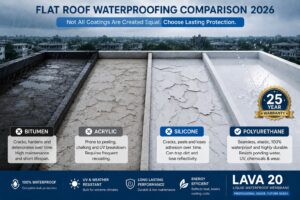
Why Liquid Waterproofing Is Often the Best Long-Term Solution
Modern roofing has shifted towards liquid waterproofing systems, especially for flat roofs.
Key Advantages:
- Seamless Protection – no joints means fewer leak points
- High Flexibility – handles expansion and contraction
- Durability – long lifespan compared to patch repairs
- Weather Resistance – ideal for Irish and UK climates
Unlike traditional repairs that only fix one area, liquid waterproofing creates a continuous protective layer across the entire roof.
This makes it especially effective for flat roof leak repair and recurring problems.
Tools and Materials Needed
To repair a leaking roof, you will need:
- Roof brush or broom
- Scraper
- Crack filler or sealant
- Reinforcement tape
- Primer
- Waterproof coating
- Roller and brush
- Safety gear
Using the right materials ensures long-lasting results.
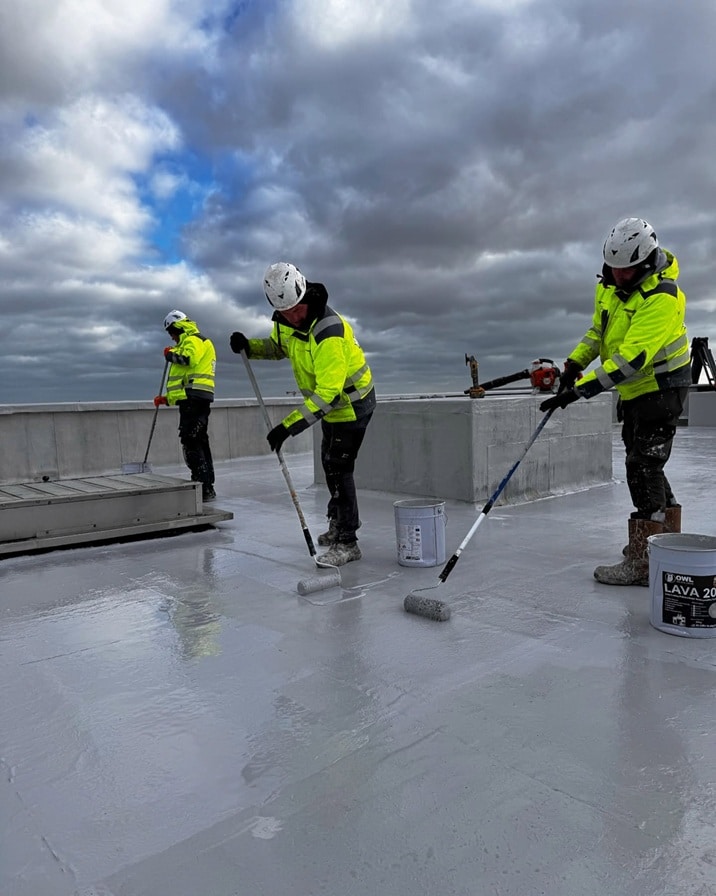
Step-by-Step: How to Repair a Leaking Roof
Step 1: Inspect the Roof
Locate the source of the leak carefully.
Step 2: Clean the Area
Remove dirt, debris, and loose material.
Step 3: Remove Damaged Sections
Scrape off failing materials.
Step 4: Repair Cracks
Seal cracks and joints properly.
Step 5: Apply Primer
Essential for proper adhesion
Step 6: Apply Waterproof Coating
Spread evenly across the surface.
Step 7: Reinforce Weak Areas
Use tape or mesh where needed.
Step 8: Apply Second Coat
Ensures full protection.
Step 9: Allow Curing
Let the coating fully dry before exposure.
How to Fix a Roof Leak Fast in an Emergency
If you need to fix roof leak fast, temporary solutions include:
- Waterproof tape
- Emergency sealants
- Tarpaulin covers
These are short-term fixes. Always follow up with a permanent repair.
Cost of Leaking Roof Repair (Ireland & UK)
Professional Costs:
- €50–€140 per m²
- £45–£120 per m²
Factors:
- Roof size
- Damage extent
- Access
- Materials
Investing in proper repair saves money long-term.
How Long Roof Repairs Last
- Temporary fixes: weeks to months
- Standard repairs: 1–5 years
- Liquid waterproofing: 15–25 years
Common Mistakes to Avoid
- Not fixing root cause
- Applying on wet surfaces
- Using wrong materials
- Ignoring joints
- Choosing cheap options
Expert Tips for Preventing Future Roof Leaks
- Inspect roof annually
- Clean gutters regularly
- Repair small issues early
- Recoat before failure
Why Choose Lava 20 Waterproofing
Lava 20 is a premium solution for long-term roof protection.
Benefits:
- UV resistant
- Durable
- Elastic
- Seamless
- Easy to apply
Ideal for flat roof leak repair and prevention.
FAQs
What is the best way to repair a leaking roof?
A full waterproofing system is often the most effective long-term solution.
How much does it cost?
€15–€140 per m² depending on method.
Knowing how to repair a leaking roof can save you thousands in future damage. The key is to act early, identify the root cause, and choose a long-term solution rather than repeated temporary fixes.
For best results:
- Fix properly
- Use quality materials
- Consider full waterproofing

OwlWaterproofing
Leave a Replay
About Us
Our mission is to provide the highest quality waterproofing systems for new builds and refurbishments at affordable prices backed up by expert personal service & 25 Year Warranty.