
How to Waterproof a Flat Roof
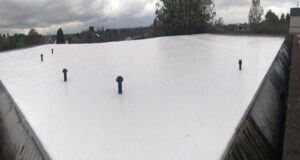
If you are searching for how to waterproof a flat roof, you are probably dealing with one of two situations: either your roof is already showing signs of trouble, or you want to prevent expensive damage before it starts. Both are smart reasons to act early. Across Ireland, the UK, and much of Europe, flat roofs are constantly exposed to rain, damp air, wind-driven moisture, UV exposure, and temperature swings. Unlike pitched roofs, they do not shed water as quickly, which means even a small weakness in the surface can turn into a leak.
That is why flat roof waterproofing matters so much. A properly waterproofed roof protects the building structure, helps prevent mold and damp, reduces maintenance costs, and can extend roof life by many years. The challenge is that many people are unsure which method to use, what materials they need, or whether they can do the work themselves.
In this guide, you will learn exactly how to waterproof a flat roof, the most common causes of leaks, the main flat roof waterproofing methods, why a liquid waterproofing system is often the best solution, what it costs in Ireland and the UK, and how to choose the right approach for your roof.
Why Flat Roofs Need Waterproofing
Flat roofs are practical, cost-effective, and common on extensions, garages, balconies, commercial buildings, and modern homes because they are more vulnerable to standing water. In Ireland and the UK, that matters a lot because the weather is often wet for long periods. Across Europe, conditions vary, but many roofs still face a difficult mix of moisture, heat, frost, and seasonal expansion and contraction.
When a flat roof is not properly waterproofed, water can begin to penetrate through cracks, joints, old seams, porous surfaces, or weak details around outlets and edges. At first, the issue may look minor. You might notice a ceiling stain, a damp smell, or peeling paint. Over time, however, trapped moisture can damage insulation, weaken structural materials, and create mold problems inside the property.
Waterproofing is not only about stopping visible leaks. It is also about protecting the full roof system from gradual deterioration. A good waterproofing layer acts like a shield against:
- Heavy rainfall
- Ponding water
- Freeze-thaw cycles
- UV exposure
- Wind-driven moisture
- Hairline cracking caused by movement
For homeowners, that means fewer repairs and better property protection. For contractors and property managers, it means lower lifecycle costs and fewer emergency issues. In most cases, waterproofing a roof early is far cheaper than repairing water damage later.
Common Causes of Flat Roof Leaks
To understand how to waterproof a flat roof properly, it helps to know why flat roofs fail in the first place. Most leaks do not happen suddenly. They develop because of one or more underlying problems.
Ponding Water
Ponding water is one of the most common causes of flat roof failure. Because flat roofs do not have a steep slope, water can sit on the surface if drainage is poor. Over time, that standing water puts pressure on weak points and accelerates material breakdown. Even quality systems can suffer if water is allowed to remain for long periods.
Cracks and Surface Splits
Temperature changes make roof materials expand and contract. In Ireland, the UK, and Europe, roofs can go from cold, wet mornings to warmer afternoons, then back to chilly nights. This repeated movement gradually causes cracks and splits, especially in older roofing systems or low-quality coatings.
Failed Seams and Joints
Traditional roofing systems often rely on overlapping sheets, membranes, or felt. These seams are common failure points. Once a seam lifts or weakens, water can begin to travel underneath the surface. Sometimes the leak appears far away from the actual entry point, which makes the problem harder to diagnose.
Aging Materials
Every roof has a lifespan. Older felt roofs, bitumen systems, and worn coatings eventually lose flexibility and waterproofing performance. They may become brittle, blistered, or porous, leaving the roof exposed to moisture ingress.
Poor Installation or Repairs
Some roofs fail not because the material was bad, but because the installation was rushed or incomplete. Inadequate surface preparation, wrong primer, poor detailing, or thin application can all shorten the life of a waterproofing system. Temporary patch repairs can also hide the real issue rather than solve it.
Types of Flat Roof Waterproofing Methods
There are several flat roof waterproofing methods available, and each has strengths and weaknesses. Choosing the right one depends on the roof type, budget, condition, and expected lifespan.
1. Liquid Waterproofing System
A liquid waterproofing system is applied as a fluid coating that cures into a seamless membrane. This is one of the most modern and effective solutions for flat roofs.
Pros
- Seamless finish with no joints across the main roof area
- Flexible and crack-bridging
- Good adhesion to many surfaces
- Suitable for complex details and awkward shapes
- Often ideal for refurbishment projects
Cons
- Surface preparation must be done properly
- Coverage rate and application thickness matter
- Premium systems may cost more upfront than basic alternatives
2. Torch-On Felt or Bitumen
Torch-on felt has been widely used for years and is still common in the market.
Pros
- Familiar traditional system
- Often used by contractors on older flat roof builds
- Can work well when installed correctly
Cons
- Has seams and overlaps
- More vulnerable to future joint failure
- Installation uses heat, which adds risk
- Repairs can become repetitive over time
3. EPDM Rubber Membrane
EPDM is a sheet-based synthetic rubber roofing system.
Pros
- Durable in many settings
- Good for certain larger roof layouts
- Long service life when installed well
Cons
- Seams still exist
- Detailing can be more difficult around penetrations and irregular shapes
- Not always the easiest option for refurbishment over mixed surfaces
4. GRP Fibreglass Roofing
GRP creates a hard, reinforced waterproof layer but if any movement occurs in the surface, it can result in cracking and potential failure of the waterproof layer
Pros
- Strong surface finish
- Popular for some domestic flat roofs
- Good for specific applications
Cons
- Lack of flexibility, may result in cracking when movement occurs
- Installation needs skill and the right weather conditions
- Not always ideal for every refurbishment scenario
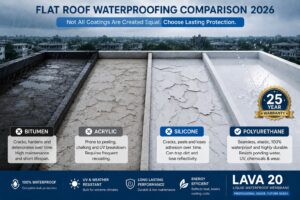
5. Acrylic or Rubber Roof Coatings
These are often used for lighter maintenance jobs or budget-conscious projects.
Pros
- Often easy to apply
- Useful for small roofs and simple refresh coats
- Lower initial cost in some cases
Cons
- Quality varies widely
- Lower-grade products may not last as long
- Not always the best waterproof roof coating for exposed flat roofs with recurring ponding water
Why Liquid Waterproofing Is the Best Solution
If you are deciding between the main flat roof waterproofing methods, liquid waterproofing often stands out as the best overall choice for long-term performance. The biggest reason is simple: seams are where many roofs fail, and a liquid system removes that weakness across the main roof surface.
When applied correctly, a liquid membrane cures into one continuous waterproof layer. That means fewer opportunities for water to find a way in. It also means the system can adapt to difficult roof shapes, outlets, upstands, edge details, and penetrations without relying on multiple separate pieces.
Another major advantage is flexibility. Roofs are never completely still. They move slightly with thermal expansion, contraction, and structural settling. A rigid system is more likely to crack over time. A quality liquid membrane, especially a polyurethane-based one, remains elastic and helps bridge minor movement and hairline cracks.
Compared with traditional felt, liquid waterproofing often offers:
- Better seam-free protection
- Easier detailing around complex areas
- Less disruptive refurbishment
- Faster application on many surfaces
- Strong long-term value
Compared with lower-grade coatings, a premium liquid system often offers:
- Better adhesion
- Greater UV resistance
- Longer lifespan
- Stronger waterproof integrity
- Better performance in damp climates like Ireland and the UK
For many domestic and commercial roofs, a polyurethane-based liquid membrane is considered the best waterproof roof coating because it balances durability, ease of application, flexibility, and long-term weather resistance. It can often be applied over prepared existing substrates, which saves labour, waste, and disruption compared with a full strip-and-replace job.
Tools and Materials Needed
If you want to understand how to waterproof a flat roof properly, you need the right tools and materials before starting. Using the wrong products or skipping preparation usually leads to poor performance.
Basic tools
- Stiff broom or brush
- Scraper
- Roller frame and rollers
- Paintbrush for edges and details
- Utility knife
- Mixing paddle if required by the product
- Gloves and protective clothing
Materials
- Roof cleaner or degreasing solution if needed
- Crack filler or repair compound
- Reinforcement fleece or tape for vulnerable details
- Primer compatible with the roof surface
- Waterproof coating or liquid membrane
- Sealant for joints and detail areas
Safety items
- Ladder safety equipment
- Fall protection where necessary
- Non-slip footwear
- Eye protection
Before applying any system, always check the manufacturer instructions. Different surfaces such as concrete, felt, metal, or old bitumen may need different preparation methods or primers.
Step-by-Step Waterproofing Process
Here is the practical process for how to waterproof a flat roof effectively.
Step 1: Inspect the roof carefully
Start by inspecting the full roof area. Look for obvious cracks, blisters, open seams, damaged flashing, ponding areas, weak corners, and signs of old repairs. Also inspect the inside of the building if possible to identify where leaks have been showing up.
The goal is to understand whether the roof is suitable for waterproofing or whether more extensive repair work is needed first.
Step 2: Clean the surface thoroughly
No waterproof coating will perform properly on a dirty roof. Sweep away debris, moss, loose material, dust, and dirt. Scrape off any poorly bonded old coating or flaky material. If grease, algae, or pollutants are present, use a cleaner suited to the surface.
Allow the roof to dry fully if required. A clean surface is essential for strong adhesion.
Step 3: Repair existing damage
Before waterproofing, fix cracks, holes, splits, and weak detail areas. This may include:
- Filling cracks with repair compound
- Sealing joints
- Reinforcing outlets and corners
- Repairing damaged upstands
- Replacing severely loose or failed sections if needed
This step is critical. Coating over a damaged surface without repairing it properly is one of the most common reasons for failure.
Step 4: Prime the roof
Many roofs need a primer before the main coating is applied. Primer helps the membrane bond correctly and improves long-term durability. Use the correct primer for the substrate and apply it evenly according to the technical guidelines.
Allow the primer to dry or cure as directed.
Step 5: Detail the weak points
Corners, outlets, seams, upstands, roof penetrations, and edges should be treated with extra care. Many systems use reinforcement fleece or tape in these high-risk zones. This adds strength and helps prevent cracks or separation at stress points.
Step 6: Apply the first coat
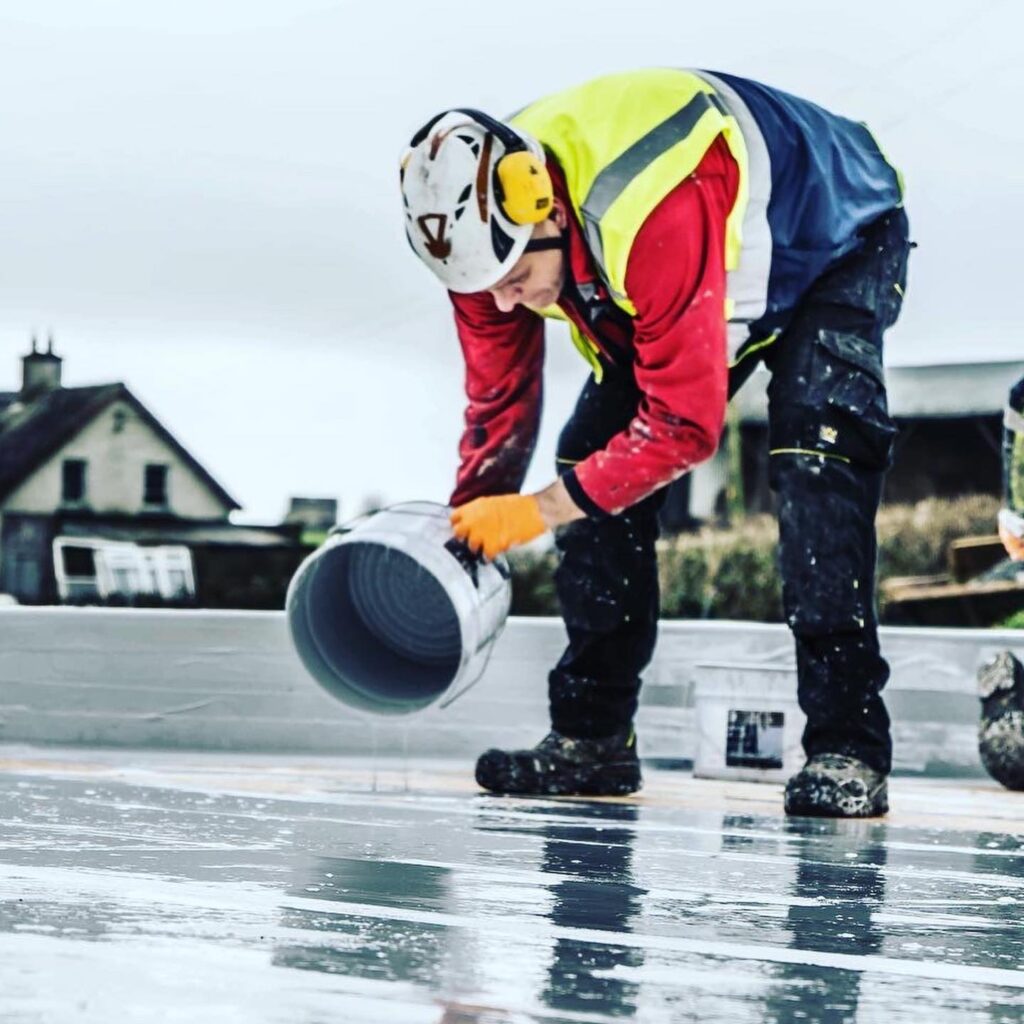
Apply the waterproofing membrane evenly using the recommended method, usually roller, brush, or squeegee. Work methodically to maintain the correct coverage rate. Too thin a coating can lead to early weakness, while uneven thickness can affect curing and protection.
Step 7: Apply the second coat if required
Many high-quality systems require two coats to achieve the right membrane build and waterproof integrity. The second coat is usually applied after the first one has cured sufficiently. Follow the stated interval and do not rush the process.
Step 8: Allow full curing
Once the coating is complete, allow the membrane to cure properly before subjecting it to traffic or harsh weather exposure where possible. Curing times vary depending on the product, thickness, and weather conditions.
Step 9: Inspect the finished work
Check the roof visually to ensure full coverage, especially around details and transitions. The finished membrane should be consistent, continuous, and free of missed spots.
Waterproofing Over Old Surfaces or Tiles
One of the biggest advantages of modern liquid systems is that they can often be used over existing surfaces, provided those surfaces are sound and properly prepared. This can make refurbishment faster and more cost-effective.
Common substrates that may be suitable include:
- Concrete
- Existing felt
- Old bitumen
- Metal
- Asphalt
- Some tiled or previously coated surfaces
However, not every old roof is a good candidate. If tiles are loose, the substrate is unstable, moisture is trapped underneath, or large sections are failing, a direct overcoat may not be appropriate.
The key is preparation. Old coatings must be firmly bonded. Loose material must be removed. Joints, cracks, and weak spots must be repaired. A compatible primer is often essential. When done correctly, waterproofing over an old roof can save significant time and money.
Common Mistakes to Avoid
Many roof failures happen because of avoidable mistakes rather than bad materials alone.
The most common mistakes include:
- Applying coating over dirt, dust, or moss
- Ignoring structural damage and only treating the surface
- Using the wrong primer or no primer at all
- Applying too little product
- Failing to reinforce detail areas
- Waterproofing in unsuitable weather
- Choosing the cheapest product instead of the right one
Another mistake is relying on short-term patch repairs year after year. That approach often increases overall costs because the root cause remains unresolved. A proper waterproofing system is usually more economical over time.
Cost of Flat Roof Waterproofing
The cost of waterproofing depends on the roof size, condition, access, and chosen system. Prices vary by region, but typical ranges in Ireland and the UK can help with budgeting.
Professional installed cost
- Straightforward domestic flat roofs: around €45 to €90 per m² or £40 to £75 per m²
- Complex or heavily damaged roofs: around €90 to €140 per m² or £75 to £120 per m²
What affects the price
- Roof condition and amount of repair needed
- Substrate type
- Access difficulty
- Number of coats
- Reinforcement requirements
- Product quality
- Labour rates in your area
If you are comparing quotes, do not focus only on the lowest price. Look at membrane type, thickness, preparation included, detail reinforcement, warranty, and expected lifespan. In many cases, the higher-quality system gives better value across ten to twenty years.
How Long Waterproofing Lasts
The lifespan of flat roof waterproofing depends on the product quality, roof movement, exposure, drainage, and application standard.
Typical service life ranges are:
- Basic coatings: around 5 to 10 years
- Mid-range rubber or acrylic systems: around 7 to 12 years
- EPDM or felt systems: often around 10 to 20 years depending on installation
- Premium polyurethane liquid membranes: around 15 to 25 years
Good maintenance can extend life significantly. Clearing drains, checking for damage annually, and repairing small issues early can add years to the roof system.
Professional Waterproofing
Professional waterproofing is usually better for:
- Large roofs
- Commercial properties
- Repeated leak issues
- Roofs with structural complexity
- High-value buildings
- Situations where warranty and long-term assurance matter
If the job involves difficult detailing, large areas, or uncertain substrate condition, professional work is often the safer investment.
When You Should Call Experts
You should call a roofing or waterproofing specialist if:
- The roof has widespread cracking or ponding
- Leaks keep returning after previous repairs
- The substrate feels unstable or soft
- You are dealing with a large commercial or multi-unit property
- The roof has many outlets, penetrations, or complex details
- You are unsure which system is appropriate
Expert advice at the start can prevent expensive mistakes later.
Why Choose Lava 20 Waterproofing
When choosing a premium system, you want performance, durability, and simplicity. Lava 20 is designed to deliver those benefits in one solution. As a high-quality liquid-applied polyurethane membrane, it is suited to the kind of wet, changeable weather seen across Ireland and the UK, while also performing well in wider European conditions.
Key benefits include:
- Seamless waterproof protection
- High elasticity to accommodate minor movement
- UV resistance for long-term surface durability
- Breathable performance
- Easy application on suitable prepared surfaces
- Strong adhesion and lasting weather resistance
Rather than depending on layered seams or rigid sheet joints, Lava 20 creates a continuous barrier across the roof. That reduces the risk of water penetration and makes it an excellent option for flat roofs, balconies, terraces, and refurbishment projects.
Take the next step
- Buy Now if you are ready to protect your roof
- Request Quote for larger projects or trade requirements
- Contact Us for help choosing the right waterproofing solution
FAQs
What is the best way to waterproof a flat roof?
In many cases, the best way is to use a high-quality liquid waterproofing system because it creates a seamless membrane and handles detail areas better than many traditional methods.
Can I waterproof a flat roof without removing the old surface?
Often yes, if the old surface is sound, dry, and properly prepared. However, loose material and damaged sections still need repair first.
What is the best waterproof roof coating for a flat roof?
A premium polyurethane liquid membrane is widely regarded as one of the best waterproof roof coating options because of its flexibility, adhesion, and long lifespan.
How much does flat roof waterproofing cost in the UK and Ireland?
Professional installation often ranges from €45 to €140 per m² or £40 to £120 per m² depending on condition and complexity.
How long does waterproofing last on a flat roof?
It depends on the system. Premium liquid polyurethane membranes can last around 15 to 25 years when installed and maintained properly.
Is flat roof repair UK demand usually due to poor installation?
Sometimes, yes. Many cases of flat roof repair UK work come from poor detailing, inadequate preparation, or repeated patch repairs instead of full waterproofing.
Now you know how to waterproof a flat roof properly: inspect the roof, clean it thoroughly, repair damage, use the right primer, reinforce weak details, and apply a high-quality membrane at the correct thickness. Whether you are a homeowner, contractor, or property manager, the key is to choose a system that matches the roof condition and delivers reliable long-term protection.
Across Ireland, the UK, and Europe, flat roofs face constant pressure from rain, damp, UV, and temperature changes. That is why modern flat roof waterproofing methods matter so much. If you want a system that combines seamless protection, flexibility, durability, and value, a polyurethane-based liquid membrane is often the smartest choice.
If you are ready to protect your property with a proven solution, choose Lava 20 for long-lasting waterproof performance.
- Buy Now
- Request Quote
- Contact Us

OwlWaterproofing
Leave a Replay
About Us
Our mission is to provide the highest quality waterproofing systems for new builds and refurbishments at affordable prices backed up by expert personal service & 25 Year Warranty.