How Lava 20 Keeps Roofs Cool, Waterproof & Energy Efficient in Hot/ Tropical Climates
One of the key advantages of the Lava 20 waterproofing system in warm and tropical climates is its ability to adapt to constant temperature fluctuations without compromising the integrity of the roof structure.
In countries with intense heat and prolonged sun exposure, roofing materials naturally expand during the day and contract as temperatures cool at night. Over time, this movement can place significant stress on roof membranes, joints, and seams, often leading to cracks, splits, and eventual water ingress. This is especially common on metal roofs and large flat roof areas where thermal movement is more extreme.
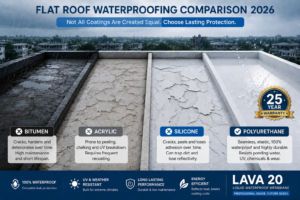
A common misconception is that applying a liquid waterproofing membrane such as Lava 20 will increase the heat on the roof surface. In reality, the Lava 20 system is specifically designed to work in harmony with the substrate beneath it. Before the Lava 20 membrane is applied, all substrate joints and detailing areas are reinforced and bonded using Owl PU Mastic. This creates a strong, flexible base that allows the entire roofing system to expand and contract together as one continuous membrane rather than separating at weak points.
Another important benefit of Lava 20 is its breathability. The system allows trapped moisture vapour within the roof structure to escape while still maintaining a fully waterproof surface. This is particularly important in hot and humid climates where condensation and heat build-up can cause damage beneath non-breathable coatings.
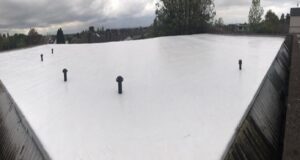
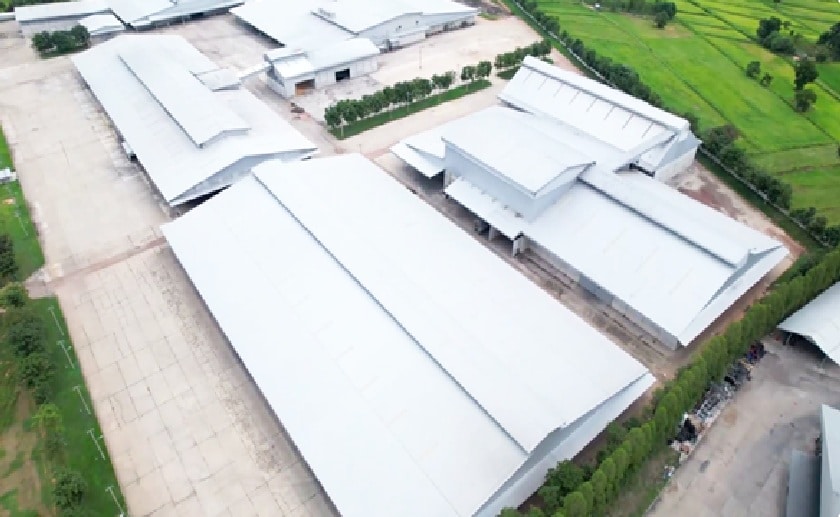
For areas exposed to extreme sunlight, Lava 20 also offers a White Top Coat with high solar reflectivity (SRI: 107). Rather than absorbing heat, the reflective white surface helps bounce a significant amount of solar radiation away from the roof. This reduces roof surface temperatures and helps maintain a cooler internal building environment, even during prolonged periods of intense heat.
A cooler roof means less heat is transferred into the building below, reducing the workload placed on air conditioning systems. In hot climates, air conditioning units often run for several hours each day simply to offset the heat entering through the roof. By lowering roof temperatures and reducing heat gain, the Lava 20 White Top Coat can significantly improve the energy efficiency of the building. Depending on the roof type, insulation levels, building design, and local climate conditions, property owners may achieve air conditioning energy savings of up to 25%.
These savings can have a substantial impact over time, particularly for commercial buildings, warehouses, offices, schools, and residential properties located in regions where cooling systems operate daily for much of the year. In addition to reducing electricity costs, lower air conditioning usage can also help extend the lifespan of HVAC equipment by reducing operating hours and mechanical strain.
Reflective roof coatings are especially beneficial on metal roofs, which are highly conductive and can otherwise transfer large amounts of heat into the building below. By reflecting heat away from the surface, the Lava 20 White Top Coat helps create a more comfortable indoor environment while contributing to lower energy consumption and reduced carbon emissions.
Because of these performance benefits, Lava 20 has been successfully used in several warm and tropical climate regions, including Spain, Portugal, the USA, and other high-temperature markets. The White Reflective Top Coat, in particular, has become increasingly popular for metal roof applications where controlling heat absorption, minimising thermal movement, and improving energy efficiency are essential for long-term roof performance.

OwlWaterproofing
Leave a Replay
About Us
Our mission is to provide the highest quality waterproofing systems for new builds and refurbishments at affordable prices backed up by expert personal service & 25 Year Warranty.