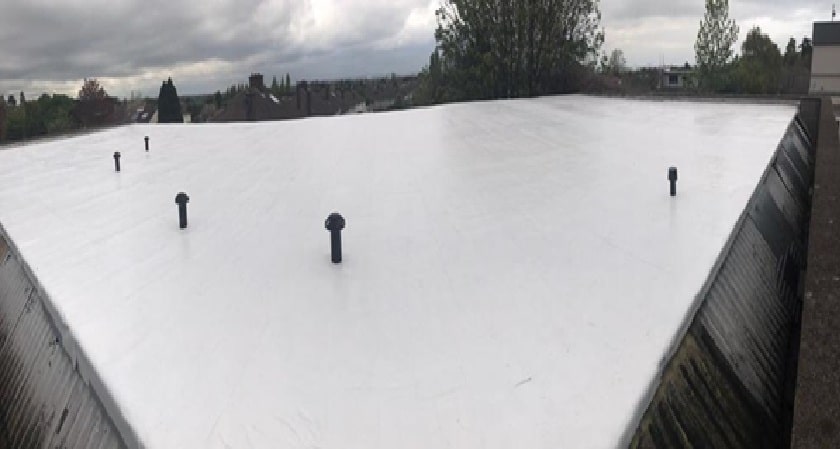
On large flat roofs, ponding water is one of the most common causes of long-term roofing problems. When water sits on the roof surface for a prolonged period, especially in low areas or dips, it can eventually find its way into small cracks, joints, seams, or weak points in the membrane.
Once moisture becomes trapped beneath the roofing system, it does not always escape easily. This hidden moisture can remain under the membrane and slowly affect the insulation, substrate, and overall roof structure. Over time, this can lead to blistering, membrane failure, internal leaks, and costly repairs.
This is where roofing outlets and ventilation points can play an important role.
Roofing outlets are used to help release trapped moisture and allow vapour pressure to escape from beneath the roof system. On larger roofs where ponding water has been present for a long time, moisture can collect around low spots. When the sun comes out and the roof surface heats up, the trapped moisture begins to expand and tries to find a way out.
Without a controlled escape point, this pressure can push against the membrane and cause blistering, bubbling, cracking, or further separation of the roofing layers. By installing suitable roofing outlets or moisture release vents in the correct areas, particularly around the left and right sides of low points or dips, the trapped moisture has a safer route to escape.
This is especially important before applying a waterproofing system over an existing roof. If moisture is trapped beneath the surface and then sealed in completely, the problem may continue underneath the new coating. The roof may look protected from above, but hidden moisture can still move, expand, and cause damage below.
For this reason, a proper roof inspection should always be carried out before any refurbishment work begins. Areas affected by ponding water, trapped moisture, damaged felt, weak joints, or saturated substrates should be identified first. In some cases, roofing outlets or vapour release vents may be required to help manage moisture before the waterproofing system is applied.
When used correctly, roofing outlets help protect the roof build-up by reducing trapped vapour pressure, supporting better roof performance, and helping to prevent future failures.
For large flat roofs, especially those with a history of ponding water, roofing outlets should not be overlooked. They are a small but important detail that can make a significant difference to the long-term success of a waterproofing project.